
Create a Wallet
Start with a clean account setup and understand what is created locally before any funds are involved.
Learn more →Keep asset management, network selection, sending and receiving, DApp access, approvals, network knowledge and wallet security in one clear learning path. imtoken helps you understand what each request means before you confirm it.
Start with a clean account setup and understand what is created locally before any funds are involved.
Learn more →Record recovery information offline and verify that your backup can be understood without exposing it.
Learn more →Match the receiving address with the correct network and asset before sharing it.
Learn more →Review destination, network, amount, gas and transaction details before submission.
Learn more →Verify the domain, requested account access and every later signature or approval.
Learn more →View assets across multiple networks while keeping network identity, address checks and confirmation state in context.
Manage networks, assets and transaction history from a mobile wallet context.
Match address, network, amount, gas and transaction hash through the full transfer lifecycle.
Transfer guide →Review browser connections, requested accounts, approvals and disconnection when using Web3 services.
Keep recovery secrets offline, inspect approval scope and avoid treating a connection as blanket permission.
A multi-chain wallet can display accounts and assets across several networks, but network identity still matters for fees, explorers and transaction finality.
Read the guide →A public chain is an open network where nodes verify and share blocks. Wallets prepare transactions; the chain records the result after consensus.
Read the guide →
EVM-compatible networks share a familiar account and contract model. Similar addresses do not merge balances across separate networks.
Read the guide →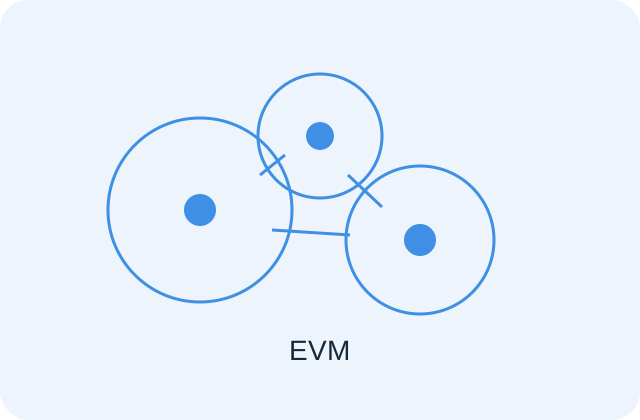
Layer 2 networks extend capacity while maintaining a defined relationship with a base chain. Cross-layer transfers may involve bridges and waiting periods.
Read the guide →
Gas represents network execution cost. A transaction can be validly signed yet remain pending or fail if fee and network conditions are not sufficient.
Read the guide →Use the official entry point and keep the application source clear.
Understand whether you are creating a new account or importing an existing one.
Keep the seed phrase offline and never disclose the private key to anyone.
Check the intended network before relying on an address or token label.
Verify address, network, amount and gas before confirming the transfer.
Use the transaction hash to verify results and revisit approvals that are no longer needed.
Connecting a wallet does not mean every later signature or token approval should be accepted. Verify each request on its own.
Read the Web3 guide →A safer wallet routine combines offline recovery backups, domain verification, network and address checks, careful signature review and permission cleanup. No wallet can remove the risks of a malicious contract, compromised device or user-approved transfer, so the quality of each confirmation matters.
Go to Security →Learn how addresses, seed phrases, private keys, networks, gas, transaction hashes, DApps and approvals fit together before you move value on-chain.
Read the starter guide →Understand PoS, validators, reward sources, network status, withdrawals and the exit process without treating variable rewards as guaranteed returns.
Learn about staking →Navigation and learning paths are organized around common wallet tasks.
Similar-looking addresses can exist on different EVM networks.
A wallet connection is not blanket permission for later requests.
Transaction hashes and network context make support questions easier to diagnose.
imtoken helps users organize multi-chain accounts and assets, prepare transfers, review transaction history and connect to DApps after explicit user confirmation. Final transaction state is determined by the relevant blockchain network.
A seed phrase can commonly restore a set of wallet accounts, while a private key provides signing control for a specific account. Both are highly sensitive and should stay offline and undisclosed.
Many EVM-compatible networks use the same address format, but their assets and transaction histories are separate. An address check is incomplete without a network check.
Gas is the network accounting mechanism for the computational resources used by a transaction or contract call. The cost can change with network conditions and the complexity of the action.
A transaction hash is a primary reference for looking up an on-chain transaction on the correct network explorer, including status, block data, fees and failure information.
Once a transaction is confirmed by the network, a wallet generally cannot reverse it unilaterally. Verify address, network and amount before sending.
No. A connection normally creates an interaction session. Token approvals, signatures and transactions are separate requests that should each be reviewed.
Download from the dedicated entry point, then continue with the getting-started and security guides.